Table of contents
Mortgage lenders and private credit firms often run borrower intake, broker communication, marketing, and front-office relationship management inside HubSpot, while underwriting, approvals, servicing, and loan administration live inside Mortgage Automator.
When those environments stay disconnected, teams feel it quickly. Data gets entered twice. Loan status updates lag. Borrower records become fragmented. Sales, underwriting, and operations end up chasing the current state of a deal instead of moving it forward.
The issue usually is not whether each system works on its own. It is whether the lender has a clean way to connect borrower engagement with the operational system that actually runs the loan. Without that connection, scale creates friction fast. Handoffs slow down, borrower experience weakens, and teams add manual work just to keep the process moving.
Why Integrate HubSpot and Mortgage Automator?
For mortgage lenders, a HubSpot and Mortgage Automator integration closes the gap between front-office activity and loan operations.
It gives sales, marketing, underwriting, and operations a more usable lending workflow across intake, underwriting, approval, funding, and post-close activity, without forcing one platform to do the other's job.
A strong integration helps lenders:
Eliminate Double Data Entry
When borrower and loan information has to be entered in multiple places, teams lose time and errors accumulate. Integration reduces re-entry and keeps records aligned.
Create One Practical View of the Loan Lifecycle
Sales and marketing can see where a deal stands without relying on side emails or manual status checks. Underwriting and operations can work from cleaner borrower context.
Improve Speed Across Handoffs
Qualified deals move into lending operations faster. Updates from underwriting, approval, and funding can flow back into the CRM without waiting on manual follow-up.
Strengthen Data Quality and Consistency
Disconnected systems create duplicates, stale statuses, and weak reporting. Better synchronization improves trust in the data across teams.
Support Better Borrower and Broker Experience
Borrowers and referral partners get more consistent communication when lifecycle changes are visible and actionable.
Build Better Reporting Across the Funnel
Lenders can connect acquisition activity and borrower engagement to funded loans more reliably when CRM and LOS data are aligned.
Defining System Roles Across the Lending Stack
Most breakdowns happen when one system is expected to do work it was never meant to own.
HubSpot and Mortgage Automator are both valuable, but they serve different purposes. HubSpot should manage engagement, communication, front-office workflow visibility, and reporting across the borrower journey. Mortgage Automator should remain the system handling underwriting, loan administration, approvals, servicing, and operational lending logic.
|
Scenario |
HubSpot → Mortgage Automator |
Mortgage Automator → HubSpot |
|
New borrower or application intake |
✔ Yes |
–
|
|
Borrower contact updates |
✔ Yes
|
✔ Yes
|
|
Loan status and underwriting milestones |
–
|
✔ Yes
|
|
Funding updates |
–
|
✔ Yes
|
|
Servicing or payoff events |
– |
Optional |
|
Broker or referral visibility |
✔ Yes |
✔ Yes |
|
Marketing attribution to funded loans |
✔ Yes |
– |
When those boundaries are blurred, the lending process becomes fragmented. The integration works best when system ownership is clear from the start.
What a HubSpot and Mortgage Automator Integration Actually Changes
When the integration is designed properly, the two systems stop behaving like isolated tools and start functioning as a coordinated lending stack.
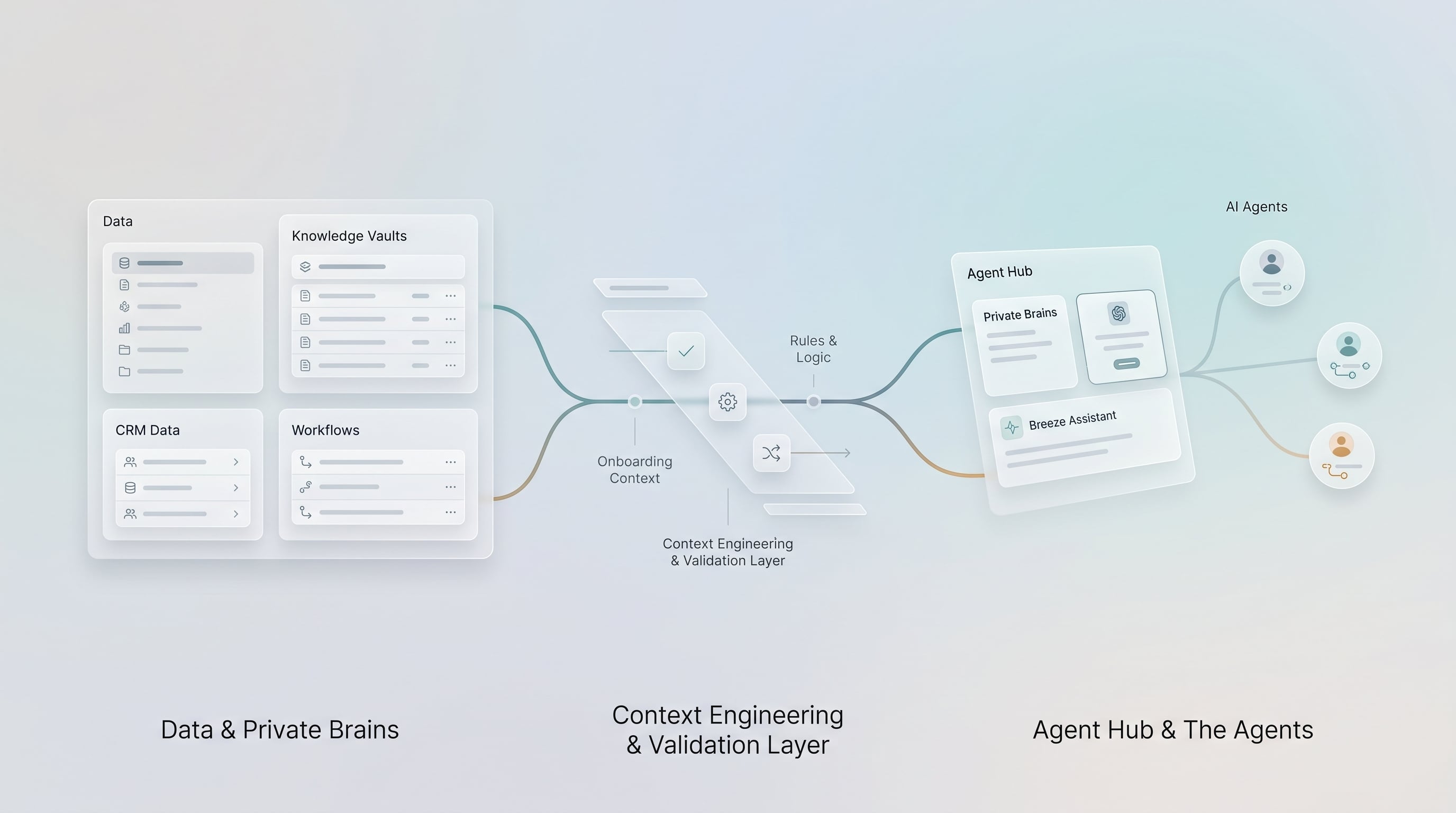
A borrower can enter through HubSpot using a form, landing page, or broker-driven intake process. That borrower and deal context can then flow into Mortgage Automator at the right point in the process, reducing manual setup work for lending teams. As underwriting progresses, key status changes can flow back into HubSpot so sales, marketing, and operations are not relying on separate check-ins to understand where the deal stands.
That matters because most lenders do not break down at lead capture or underwriting in isolation. They break down in the handoffs between them.
A well-structured integration helps align:
- Borrower intake and application creation
- Underwriting visibility and status routing
- Broker, lawyer, or partner coordination
- Funding milestones and post-close workflows
- Reporting across acquisition, approval, and funding
How the Integration Typically Works
A HubSpot and Mortgage Automator integration usually connects the lifecycle events that begin in the CRM with the operational events that happen inside the LOS.
When activity happens in HubSpot, such as a new borrower intake, deal qualification, or front-office update, the integration can prepare the relevant borrower and loan data and pass it into Mortgage Automator according to the lender's workflow design.
When activity happens inside Mortgage Automator, such as underwriting progress, approval, or funding, those changes can be reflected back into HubSpot so the front office has timely visibility.
This does not mean every field or every object needs to move both ways. It means the lender defines which data should live where, what each team needs to see, and which lifecycle events should trigger the next action.
That is the difference between a useful integration and a brittle sync.
What Typically Syncs
The exact design depends on the lender's process, but a few patterns show up often.
Borrower and Contact Data
Borrower details captured in HubSpot can be used to create or update corresponding borrower records in Mortgage Automator. Contact changes can be kept aligned so teams are not working from outdated phone numbers, emails, or profile details.
Loan or Application Records
Many lenders choose to represent the opportunity in HubSpot as a deal tied to a lending-specific pipeline. Mortgage Automator holds the loan record used for underwriting and servicing. The integration keeps these records connected so stage visibility improves without forcing the CRM to become the loan system.
Status Milestones
Underwriting milestones, approval states, and funding events in Mortgage Automator can update HubSpot so stakeholders know what happened and what should happen next.
Partner and Referral Visibility
Where brokers, lawyers, or investors are part of the process, the integration can support cleaner relationship tracking and coordinated communication without making those teams chase updates manually.
Key Benefits Realized Through Integration
Integrating HubSpot and Mortgage Automator is not just a technical improvement. It changes how the lending team operates day to day.
Less Manual Work
Teams spend less time re-keying borrower and loan data between systems.
Faster Deal Progression
Deals move through intake, underwriting, and funding with fewer avoidable delays between teams.
Better Front-to-Back Visibility
Sales, underwriting, and operations work from more consistent status information.
Stronger Borrower and Broker Experience
People get updates faster and experience fewer process gaps.
More Reliable CRM Adoption
When HubSpot reflects real lending activity instead of partial or stale information, teams have more reason to use it.
Better Revenue and Funnel Insight
Lenders can connect funded loans back to acquisition activity with greater confidence.
Implementing a HubSpot and Mortgage Automator Integration: Practical Considerations
A strong design starts with clarity, not code.
Define System Ownership Early
Decide which system owns which categories of data. HubSpot should not try to replace the LOS, and Mortgage Automator should not be asked to become the engagement layer.
Align Around Real Lifecycle Stages
Map the stages that matter to your lending process. Intake, qualification, underwriting, approval, funding, and servicing need clear operational meaning across systems.
Include the Right Stakeholders
Sales, operations, underwriting, IT, and leadership should align on what visibility is needed and what actions should be automated.
Keep Governance in Mind
Sensitive borrower data, audit requirements, and process traceability all matter. The integration should support those realities, not work around them.
Test Around Handoffs and Exceptions
The risk in lending operations usually shows up at stage changes, not during normal happy-path movement. Test the handoffs, exceptions, and edge cases carefully.
Bottom Line
Mortgage lenders do not usually struggle because they lack systems. They struggle because their systems are not aligned around how lending actually works.
HubSpot is well suited to manage borrower engagement, relationship activity, and front-office workflow visibility. Mortgage Automator is well suited to run loan administration, underwriting, and servicing. The value comes from connecting them in a way that removes duplicate work, improves visibility, and creates a cleaner operating model across the lending lifecycle.
For lenders trying to scale without increasing manual overhead, a HubSpot and Mortgage Automator integration can become a practical advantage. It helps teams move faster, communicate more clearly, and operate from a more reliable view of the borrower journey from first inquiry through funding and beyond.
Explore Related Resources